How to Care for Your Upholstery Between Professional Cleanings
Your sofa gets used every single day. Between kids, pets, guests, and the occasional dinner in front of the TV, fabric takes a beating long before anyone schedules a professional cleaning. Good upholstery care at home is what keeps that wear from turning into permanent damage.
The good news is that most of it takes minutes, not hours. Here's what actually helps, what to skip, and how to know when a problem has moved past what you should handle yourself.
Why Upholstery Care at Home Matters More Than You Think
Dirt does not sit politely on the surface of fabric. Foot traffic, body oils, and airborne dust work their way into the weave, and once they settle deep into the fibers they act like sandpaper every time someone sits down. That's what wears the nap off a cushion and turns the arms of a chair a different shade than the back.
Stains behave the same way. A spill that sits for a week is a very different problem than a spill you blotted in the first two minutes.
The point of at-home care is not to deep clean your furniture. It's to keep dirt and spills from ever setting in, so that professional cleaning has less work to undo.
Start With Your Fabric, Not Your Cleaner
Before you spray anything, find out what you're working with. Most furniture carries a cleaning code tag under a cushion or on the frame, and it tells you whether the fabric tolerates water-based cleaners, solvent cleaners, or vacuuming only.
Fabric type matters just as much. Synthetic fabrics, natural materials like cotton and linen, blended textiles, and leather or vinyl all respond differently to the same product. That's why our line of professional-grade furniture care products includes separate formulations rather than one all-purpose bottle.
Three rules to follow every time:
- Test in a hidden spot first. The back of a skirt, the underside of a cushion, or a seam allowance works well. Wait for it to dry completely before you judge the result.
- Read the label and the Safety Data Sheets for the products you're using. This matters most in homes with kids, pets, or anyone with respiratory sensitivities.
- Never mix products. Combining cleaners can set a stain permanently or discolor the fabric.
A Simple Routine That Actually Fits Your Week
You do not need a complicated schedule. You need a few small habits.
Weekly
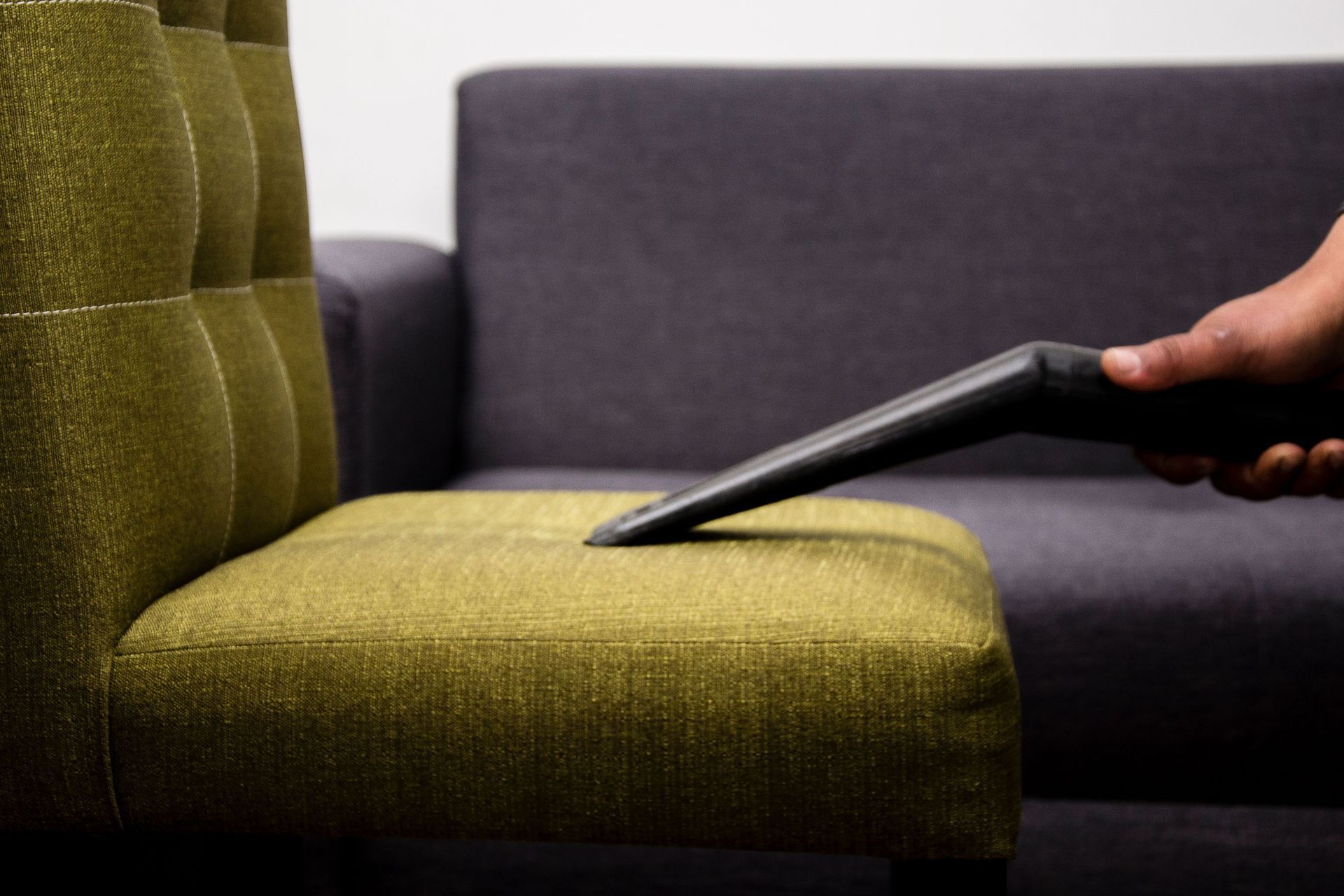
Vacuum the seat, back, and arms with an upholstery attachment. Get into the crevices where crumbs and grit collect. If your cushions are reversible, flip and rotate them so wear spreads evenly instead of concentrating in one favorite spot.
Monthly
Wipe down hard surfaces such as wood trim, legs, and glass tops. Check for loose buttons, thinning fabric at seams, and squeaks or wobbles in the frame. Catching a small structural issue early is far easier than dealing with it after it fails.
Every Few Months
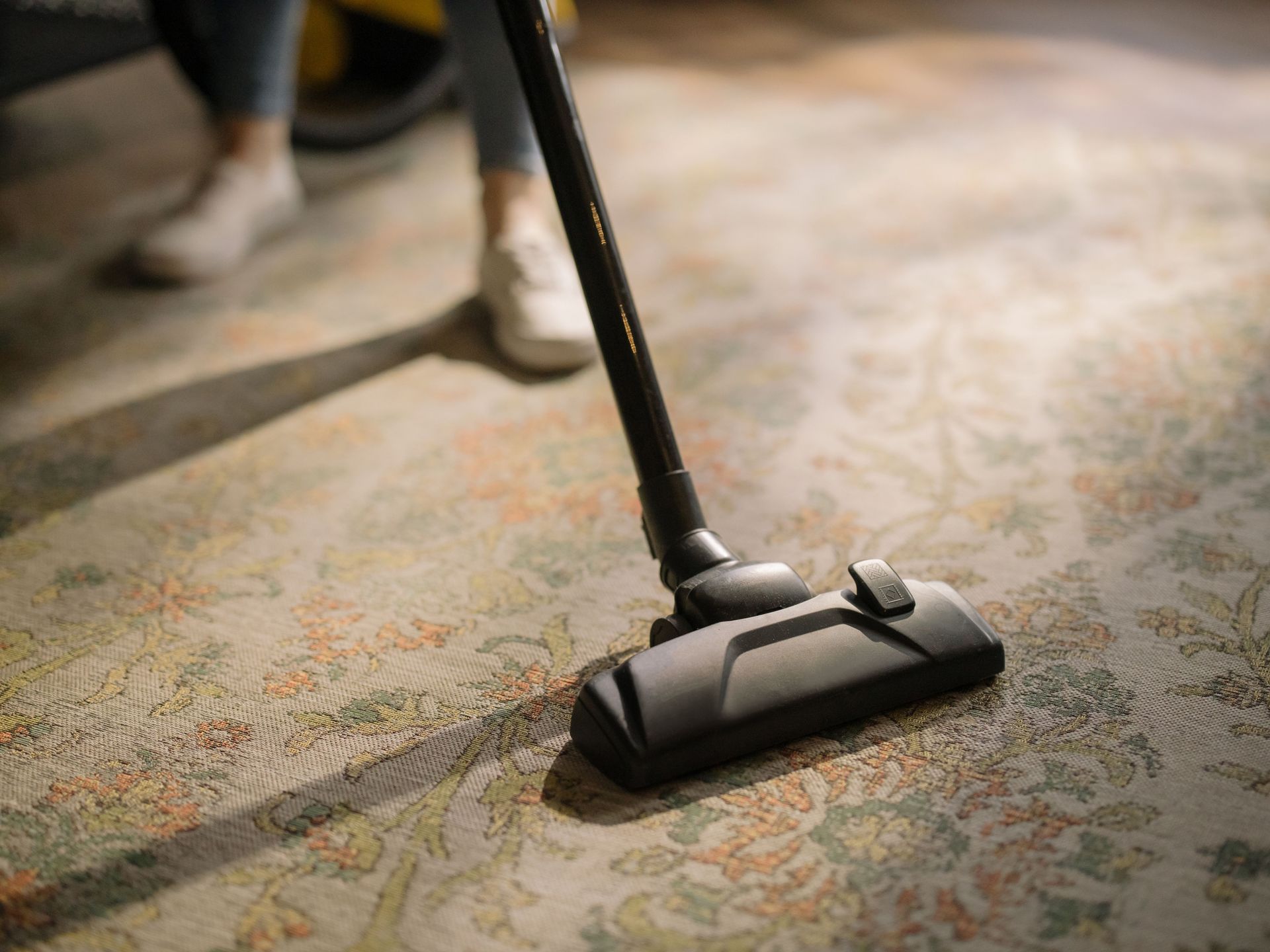
Pull the furniture away from the wall and vacuum behind and underneath it. Look at how your pieces sit relative to windows and vents. Direct sunlight fades fabric unevenly, and a heat register aimed at a cushion will dry out leather over time.
For pieces that get heavy hand contact, such as recliner arms and dining chairs, the ServeCare line of sanitizing products is built to treat skin, furniture, and surrounding surfaces without the drawbacks of alcohol-based cleaners.
How to Handle a Spill Before It Becomes a Stain
Speed matters more than technique here. The first two minutes decide most outcomes.
- Blot, never rub. Rubbing pushes the spill deeper into the fibers and can distort the fabric's texture.
- Work from the outside in. This keeps the spill from spreading into a wider ring.
- Use a clean white cloth. Colored towels can transfer dye into damp fabric.
- Lift solids first. Scoop food or mud off with a spoon before you introduce any liquid.
- Match the product to the mess. Pet accidents, red wine, and grease each call for a different formulation. Reaching for the nearest bottle is how a small spot becomes a permanent one.
- Let it dry fully before you judge it. Damp fabric almost always looks worse than it will once dry.
If a spot lightens but doesn't disappear, stop. Repeated aggressive treatment on the same area is one of the most common ways people damage their own upholstery.
Know Where At-Home Care Stops
Some things are simply not DIY projects, no matter how many videos suggest otherwise. Step back and get help when you're facing:
- A tear, split seam, or puncture in the fabric
- Frame damage, broken springs, or a cushion that has collapsed
- A reclining or motion mechanism that sticks, grinds, or won't latch
- Deep-set staining across a large area
- Sun fading or discoloration you cannot even out
- Odors that persist after the surface is clean
This is where ServeCo comes in. We manage the whole service request from the moment you report the issue through to resolution. That means figuring out what's actually wrong, determining what your coverage includes, arranging on-site service at your home, and keeping you updated along the way. You are not left chasing down a technician on your own.
If your furniture is covered under an extended service program, your protection may already cover the situation you're dealing with. If it isn't, you can still request service without a warranty through a private pay option.
Your Next Step
Good upholstery care at home buys you years of better-looking furniture. Vacuum regularly, treat spills fast, match the product to the fabric, and stop before you make a problem worse.
When you hit something that needs a professional, find the service on our site that matches your situation, then call 888-818-3229 to talk through the details. Press 1 for an existing claim, press 2 to start a new one. We'll take it from there.